How an SLS orthotic is made
The clinician scans the foot and writes the prescription. The shell is then designed individually around that scan: arch profile, heel cup depth, posting, skives, cut-outs and shell thickness.
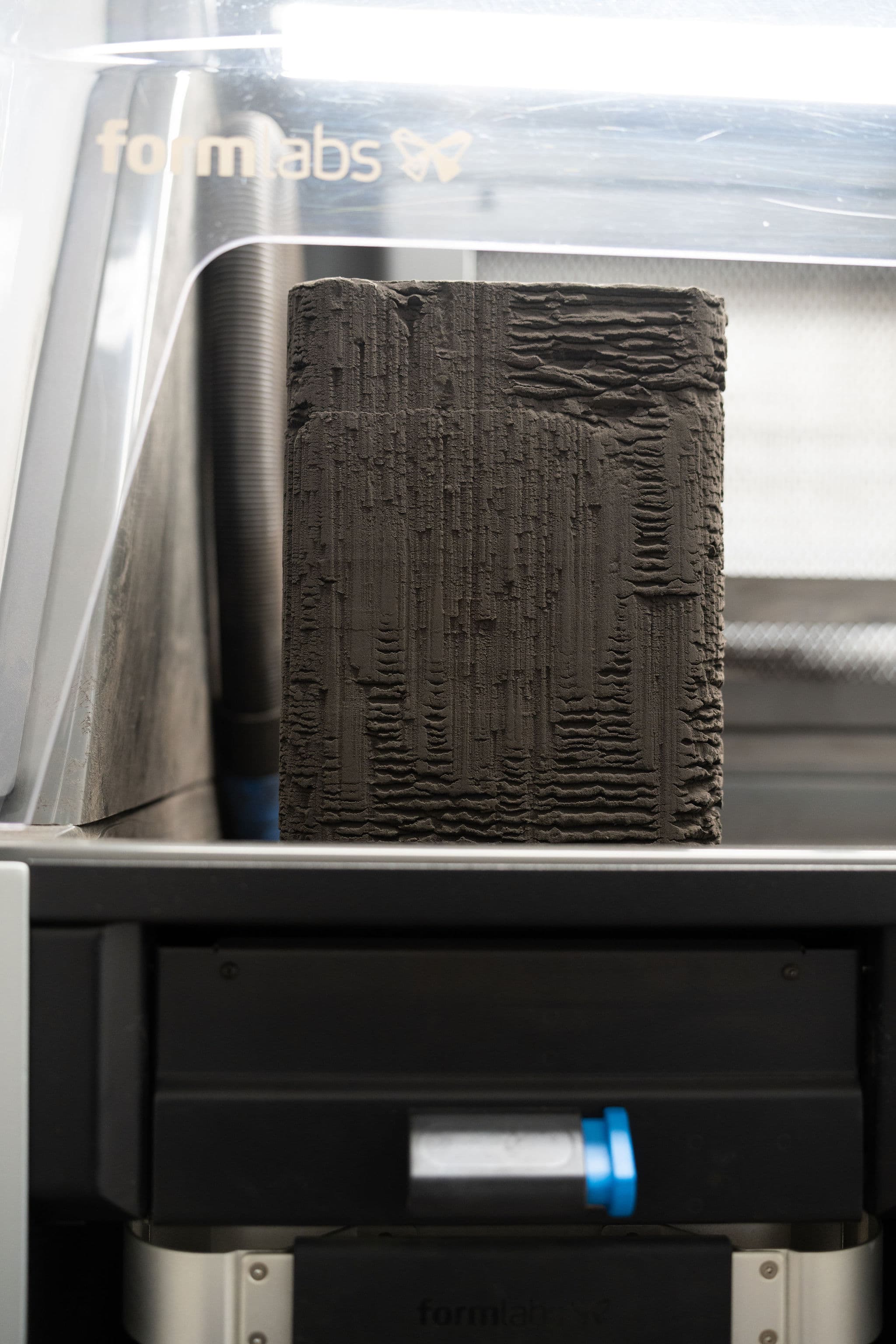
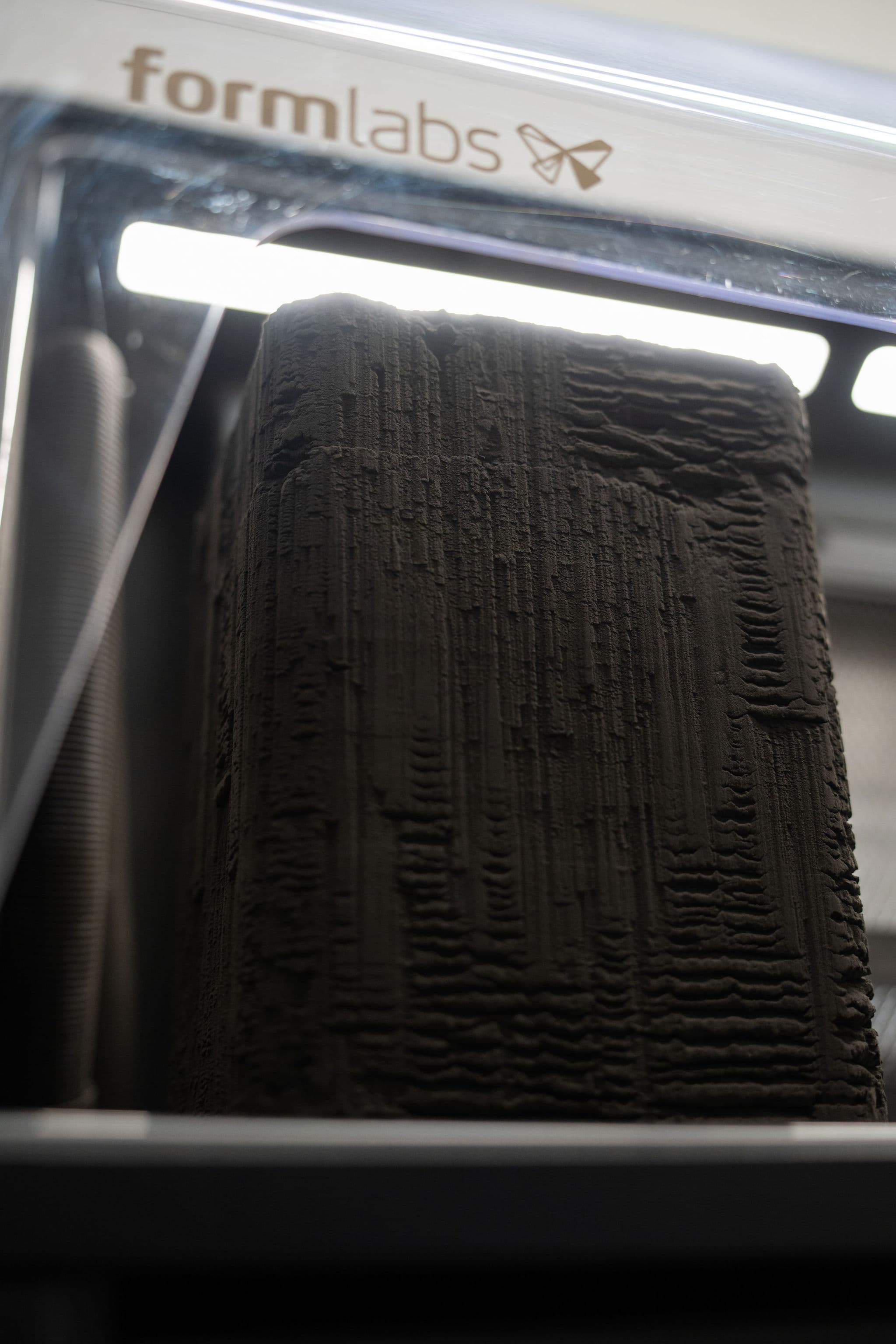
The design goes to a selective laser sintering printer. At Réalta that is a Formlabs Fuse 1+, fusing PA11 nylon powder in 110 micron layers. A full build takes many hours and holds several pairs, nested in unfused powder that supports them throughout the print.
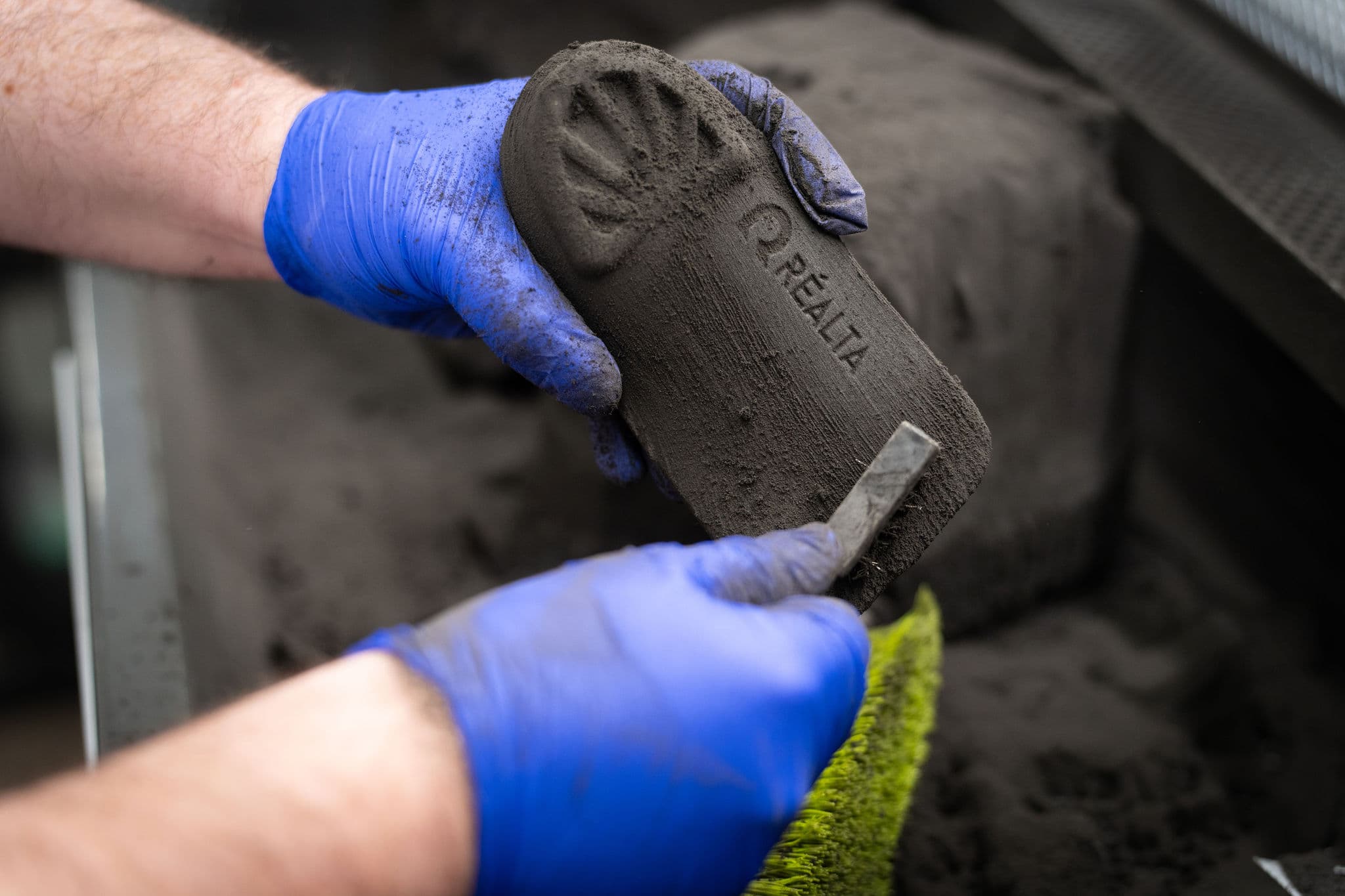
After cooling, the shells are broken out of the powder cake, depowdered, media-blasted and inspected. Covers and additions are then fitted by hand before a final quality check.
Why PA11 nylon
PA11 (Nylon 11) is made from castor beans rather than crude oil. It is tough, flexes without cracking and recovers its shape, which is what you want from a device loaded thousands of times a day. It is also consistent: the same design printed next month behaves the same as today’s pair.
SLS compared with other methods
| SLS printed (Réalta) | Vacuum-formed polypropylene | CNC milled | FDM printed | |
|---|---|---|---|---|
| Starts from | Digital scan and digital design | Cast or scan, then a positive mould | Digital scan, block of material | Digital scan and design |
| Shape accuracy | Printed directly from the design | Thins and springs back during forming | Limited by tool size and block | Good, with visible layer lines |
| Posts and raises | Printed into the shell | Glued on after forming | Milled in or glued on | Printed in |
| Variable thickness and flex zones | Yes, designed per zone | No, one sheet thickness | Limited | Limited by infill |
| Strength between layers | Fused powder, near-uniform | Uniform sheet | Uniform block | Weaker between layers |
| Repeat pair | Identical reprint from file | Re-form from mould | Re-mill from file | Reprint from file |
What it means in clinic
Fewer surprises at fitting. The device matches the design, the posting is where you prescribed it, and a duplicate pair for boots or work shoes is a reprint from file rather than a new cast. See the Réalta range or read more on the technology.
Common questions
Are 3D printed orthotics better than traditional custom orthotics?
The prescription matters more than the process, but SLS printing removes several sources of error: there is no heat-forming step, corrections are printed into the shell rather than glued on, and every reprint matches the original design exactly.
What is SLS 3D printing?
Selective laser sintering spreads a fine layer of nylon powder across a build chamber and uses a laser to fuse the cross-section of each part. The bed drops, a new layer of powder is spread, and the process repeats until the part is complete. Unfused powder supports the part, so complex shapes like lattice heels need no support structures.
Are 3D printed insoles the same as 3D printed orthotics?
Not always. Many consumer “3D printed insoles” are FDM printed from a phone photo or generic foot shape. A custom foot orthosis is prescribed by a clinician after an assessment and designed from a 3D scan of the patient’s foot.
How do patients get Réalta 3D printed orthotics?
Through their podiatrist or MSK clinician. Réalta Labs manufactures for registered clinics across the UK and Ireland; the clinician assesses, scans and prescribes.